Should I Take Moringa in the Morning or at Night?
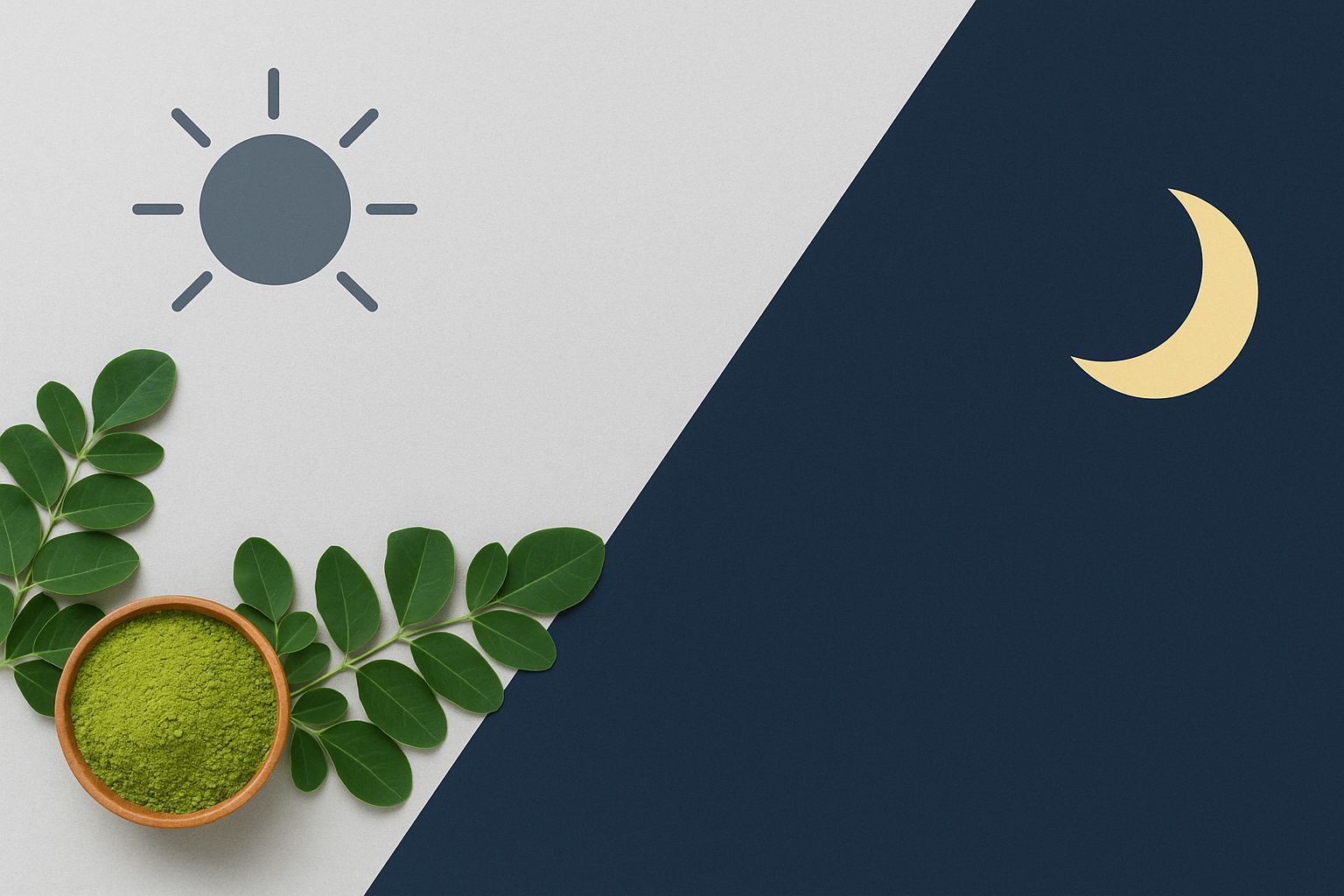
Quick answer: For most people, moringa is best taken in the morning with food to support energy, focus, and nutrient absorption. If your primary goal is blood sugar management, reducing inflammation, or improving sleep quality, taking moringa in the evening is also well-supported by research. When in doubt, consistency matters more than timing — take it at the same time every day.
Moringa (Moringa oleifera) is one of the most nutrient-dense plants on Earth — but a question we hear constantly from South African customers is: does it actually matter when you take it?
The short answer is yes — timing can influence how your body responds to moringa, depending on your specific health goals. This guide covers the science, a goal-by-goal breakdown, practical recipes, and answers to the most common questions. All Moringa Utopia products are grown and manufactured on our family farm in Mookgopong, Limpopo — no imports, no additives, no fillers.
Morning vs evening: at a glance
Use this table as a quick reference before reading the full breakdown:
|
Morning |
Evening |
|
|
Best for |
Energy, focus, iron absorption, pre-workout |
Blood sugar, inflammation, sleep support |
|
Key nutrients |
Iron, magnesium, B vitamins, vitamin C |
Isothiocyanates, kaempferol, tryptophan, magnesium |
|
Timing |
With breakfast, or 30 min before exercise |
After dinner, or 30–60 min before bed |
|
Best product |
Powder in smoothie or Tablets 500mg |
Tablets 500mg, Capsules 400mg, or Juice & Extract |
|
Can combine? |
Yes — many customers split the dose morning and evening |
Why timing matters: how moringa interacts with your body
Moringa's bioactive compounds — quercetin, chlorogenic acid, isothiocyanates, iron, magnesium, and beta-carotene — interact with multiple physiological systems. A comprehensive 2023 review of moringa's dynamic bioactive properties (ScienceDirect) confirmed that p-coumaric acid and quercetin show higher bioaccessibility in the small intestine, while chlorogenic acid absorbs better at the stomach level. This means that what you take moringa with — and at what point in your daily eating pattern — can meaningfully affect how much benefit you extract.
Your digestive physiology also changes throughout the day. Gastric motility is elevated in the morning as your body transitions from overnight fasting to active metabolism, creating an ideal absorption window. In the evening, the body shifts toward repair and regeneration — when several of moringa's anti-inflammatory and sleep-supporting compounds become particularly active.
Taking moringa in the morning
Morning is the optimal time for most people. Here is the science behind each mechanism.
1. Iron, energy, and fatigue
Iron deficiency affects an estimated 30–40% of South Africans, making it one of the most common causes of chronic fatigue and low physical endurance. A 2021 review by Islam et al. (PMC8373516) confirmed moringa's exceptionally high iron concentration and noted that its simultaneous vitamin C content significantly improves non-haem iron absorption — a critical advantage since plant-based iron is inherently less bioavailable than meat-based haem iron. Taking moringa at breakfast, especially with a small amount of dietary fat, further enhances absorption of its fat-soluble antioxidants.
2. Cortisol alignment and metabolic priming
Cortisol peaks in the first hour after waking — a natural circadian mechanism that primes metabolism, alertness, and physical readiness. Taking moringa during this window, when your metabolic systems are already activated, allows your body to make the most of its iron, magnesium, and B vitamins — all of which feed directly into ATP (cellular energy) production.
3. Cognitive focus and neuroprotection
Quercetin and chlorogenic acid in moringa have been studied for neuroprotective effects. A 2023 comprehensive review by Pareek et al. (PMID 36768420), published in the International Journal of Molecular Sciences — with co-authors including researchers from South Africa's University of KwaZulu-Natal — identified moringa's role in supporting cholinergic and dopaminergic activity and upregulating Nrf2 signalling, a pathway that protects neurons from oxidative damage. Morning timing, when cognitive demands are typically highest, is the most practical time for these benefits.
Best for morning: Energy and fatigue | Iron deficiency | Cognitive focus and mental clarity | Pre-workout performance | General daily nutrition
Morning products: Moringa Leaf Powder blended into a breakfast smoothie, or Moringa Tablets 500mg taken with breakfast for a precise, no-preparation daily dose.
Morning recipe: green energy smoothie
Recipe: 1 tsp Moringa Utopia Leaf Powder | 1 frozen banana | 1 large handful of spinach | 1 tbsp almond butter (dietary fat enhances antioxidant absorption) | 200ml oat or coconut milk | squeeze of fresh lemon juice (vitamin C boosts iron absorption) | blend until smooth. Serves 1. Preparation: 5 minutes.
Taking moringa at night
Evening use of moringa has specific, research-supported advantages for several important health goals.
1. Anti-inflammatory support during overnight repair
The body's primary tissue repair processes occur during deep sleep. Moringa's isothiocyanates and flavonoids modulate the NF-κB inflammatory signalling pathway — a mechanism confirmed across 26 separate systematic reviews, synthesised in a 2025 Frontiers in Pharmacology umbrella review (PMC12127422). Taking moringa in the evening means these anti-inflammatory compounds are circulating precisely when the body's repair processes are most active.
2. Blood sugar stability during overnight fasting
A double-blind, randomised, placebo-controlled human trial by Gómez-Martínez et al. (2022), published in Nutrients — conducted in subjects with prediabetes consuming 2,400mg of moringa dry leaf powder daily for 12 weeks — found significant reductions in fasting blood glucose (FBG) and HbA1c in the moringa group compared to placebo. Taking moringa after dinner may help moderate glucose levels during the overnight fasting period, which is particularly relevant for the estimated 4.5 million South Africans living with diabetes.
3. Sleep support: GABA, tryptophan, and magnesium
Moringa supports sleep through three distinct nutritional pathways. First, a peer-reviewed study by Liu et al. (2022), published in Pharmaceutical Biology (PMC9122383) found that moringa's kaempferol potentiates sleep via the GABAergic pathway — the same calming mechanism targeted by many prescription sleep aids, but through a gentle, food-based route.
Second, moringa is a source of tryptophan, an essential amino acid the body converts to serotonin, which in turn converts to melatonin — the hormone regulating your sleep-wake cycle. It is important to note that a 2014 screening study (Padumanonda et al., PMC3913336) confirmed melatonin is not directly present in moringa leaves. Rather, moringa provides the tryptophan precursor, which supports your body's own melatonin production — a gentler, safer mechanism than supplemental melatonin.
Third, moringa's magnesium content supports nervous system relaxation and GABA receptor activity. Magnesium deficiency is strongly associated with poor sleep quality, and consistent moringa use is one of the more effective natural ways to address it. Moringa is completely caffeine-free, making evening use safe for virtually all users.
Best for evening: Blood sugar management | Chronic inflammation and joint pain | Overnight tissue recovery | Sleep quality support | Stress and cortisol reduction
Evening products: Moringa Tablets 500mg or Moringa Capsules 400mg taken 30–60 minutes before bed with a light snack. Our Moringa Juice & Extract diluted in warm water makes a soothing, easy-to-digest evening option.
Evening recipe: warm moringa bedtime drink
Recipe: 1 tsp Moringa Utopia Leaf Powder | 250ml warm oat or almond milk | 1 tsp raw honey | pinch of cinnamon (supports overnight blood sugar stability) | pinch of ground ginger (anti-inflammatory) | stir until dissolved — do not boil. Drink 30–60 minutes before bed. Serves 1.
Goal-by-goal timing guide
- Energy and fatigue: Morning, with food. Iron and B vitamins need dietary context for best absorption.
- Blood sugar management: Evening, after your largest meal. Supports glucose stability during the overnight fast.
- Joint pain and inflammation: Evening slightly preferred — anti-inflammatory compounds act during overnight repair. Morning also effective.
- Cognitive focus: Morning, when mental demands are highest.
- Sleep quality: Evening, 30–60 minutes before bed.
- Skin and hair health: Either — consistency matters more than timing for aesthetic goals.
- General daily nutrition: Morning is the default. Daily consistency over weeks matters far more than the specific hour.
- Pre-workout performance: 30–60 minutes before training, regardless of time of day.
Dosage and practical tips
- Start low: Begin with 1 tsp of powder (~2g) or 1–2 tablets per day. Build gradually over 1–2 weeks to allow your digestive system to adjust.
- Take with food: Moringa can cause mild nausea on a completely empty stomach. A small meal or snack is sufficient.
- Pair with fat: Fat-soluble antioxidants absorb better alongside dietary fat — avocado, nut butter, or coconut milk work well when adding powder to smoothies.
- Stay hydrated: Moringa has a mild detoxifying effect. Drink sufficient water throughout the day, particularly when starting supplementation.
-
Consistency over perfection: Taking moringa at a slightly suboptimal time every day outperforms perfect timing done inconsistently. Build a routine and stick to it.
Browse our full SA-grown range: Moringa Powder | Tablets 500mg | Capsules 400mg | Juice & Extract.
What our customers say
Verified customer review: "My life has changed ever since I started taking Moringa. I sleep better now and my skin is glowing." — Amanda, verified Moringa Utopia customer. Individual results may vary. Moringa is a food supplement, not a medicine.
Frequently asked questions
Should I take moringa on an empty stomach?
It is generally better to take moringa with food. While fasting absorption may be marginally higher for certain compounds, moringa is more likely to cause mild nausea on a completely empty stomach. A small breakfast or snack is sufficient.
Can I take moringa twice a day — morning and night?
Yes. Many of our customers split their daily dose — powder or juice in the morning for energy, and tablets or capsules in the evening for anti-inflammatory and blood sugar support. Most users take 2–4 of our 500mg tablets per day in total.
Will moringa keep me awake at night?
Moringa contains no caffeine or stimulants whatsoever. The energy benefit associated with moringa comes from nutritional repletion — particularly correcting iron and magnesium deficiencies — not from central nervous system stimulation. The vast majority of users take moringa in the evening without any sleep disruption.
Does moringa interfere with blood pressure or diabetes medication?
Moringa has mild blood pressure-lowering and blood sugar-lowering properties. If you are on chronic medication for either condition, always consult your doctor before supplementing. For a full breakdown of who should exercise caution with moringa, see our dedicated guide: Who Should Not Take Moringa?
Is moringa powder or tablets better for morning use?
Both are equally effective. Powder is more versatile — blend it into smoothies, stir it into oats, or mix into warm water. Tablets are convenient and precise — pure moringa leaf with no fillers, at 500mg per tablet. The choice comes down to your personal preference and routine.
What happens if I miss a dose of moringa?
Simply take your normal dose at the next regular time and continue as usual. Do not double up to compensate. Moringa's benefits are cumulative over weeks and months of consistent use — missing a single dose has no meaningful impact.
Should I take moringa before or after exercise?
Pre-workout (30–60 minutes before training) is optimal for performance and endurance, as moringa's iron and magnesium improve oxygen delivery and muscle function during exercise. Post-workout moringa supports recovery via its amino acid content and anti-inflammatory compounds. Both approaches are valid — choose based on your routine.
Disclaimer: This article is for informational purposes only and does not constitute medical advice. Moringa oleifera is a food supplement, not a medicine. Always consult a qualified healthcare professional before changing your supplement routine, particularly if you are on chronic medication, pregnant, or breastfeeding.